ACR Ground ServicesBlog

The Case of the Corroded Pump Wires: A Fire Hazard Waiting to Happen
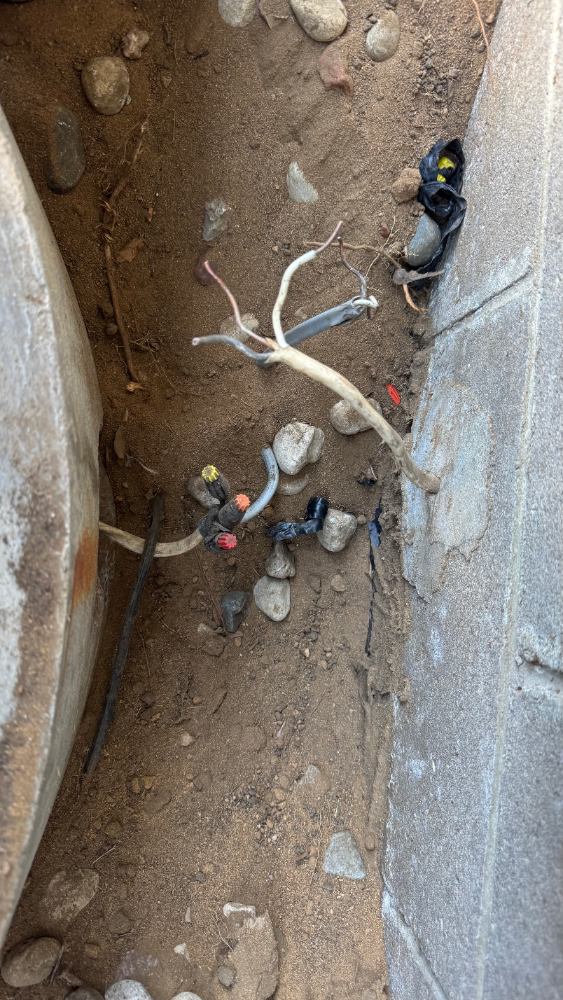
We were called to service a residential irrigation pump system that had been installed by another contractor. The homeowner reported that the pump was no longer cycling on. Our initial assumption was that a wire had been cut, as a foundation repair crew was on-site. We began our diagnostics at the pump control relay. Instead of the expected open circuit or a direct short, we discovered an extremely high resistance on the wires leading to the pump. This was an unusual finding and pointed to a deeper, more complex issue.

The Problem

A high-resistance reading indicated a breakdown in the electrical circuit's continuity, but not a complete break. We determined the only way to find the source of the problem was to excavate. The excavation revealed a highly dangerous installation error: the 120V/220V electrical cable had been improperly spliced and buried underground. Underground electrical splices on high-voltage lines, especially when not rated for direct burial, are a serious violation of National Electrical Code (NEC). The underground environment exposes the splices to moisture and corrosive elements. Over time, the constant exposure to water causes the steel coil within the wire nuts to corrode. This corrosion leads to a loss of continuity and a decrease in tension on the wire, which eventually causes electrical arcing. This arcing generates intense heat and poses a severe fire risk.

The Cause and Result

The high resistance we measured was a direct result of this corrosion and impending arcing. The compromised splices were failing, starving the pump of the necessary voltage to cycle. The wires were not just non-functional; they were a fire hazard waiting to ignite. In this scenario, the failure of the pump was a fortunate warning sign, preventing a potentially catastrophic house fire.

Our team promptly de-energized the circuit, removed the faulty wiring, and installed new, continuous, direct-burial-rated wire from the control box to the pump. This ensured the system was brought up to code and, more importantly, made safe for the homeowner.

This case serves as a critical reminder of the dangers of improper electrical installation. While it's easy to assume a problem is a simple fix, the reality is that seemingly minor issues can hide major safety risks.
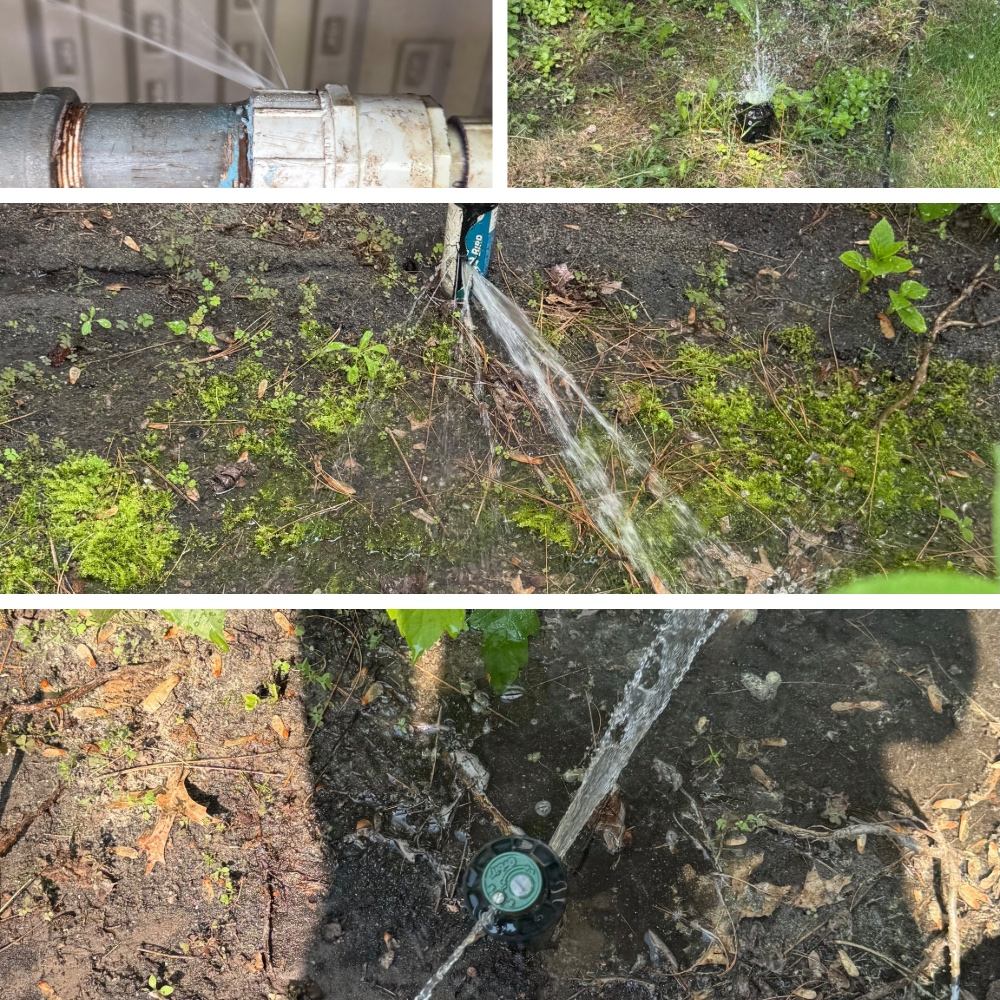
Case Study: The Ruined System ❄️🧊

Cause: The freezing and expansion of water within the system's pipes, valves, and components due to improper or neglected winterization.

A customer contacted us in the spring, reporting that their irrigation system was completely non-functional. They explained that they had hired a local handyman to winterize their system the previous fall. The handyman, equipped with a small, personal-use air compressor, assured the homeowner he could handle the job for a fraction of the cost of a professional service.

The customer was not aware that properly winterizing an irrigation system requires a specialized, high-volume air compressor, not a small, home-use model. An undersized compressor simply cannot produce the necessary volume of air to effectively purge all the water from the system's many pipes, valves, and sprinkler heads. As a result, pockets of water were left behind, silently waiting for the first hard freeze. As the temperatures dropped, this trapped water froze, expanded, and caused catastrophic damage.

The Damage

The effects of this oversight were extensive and costly:

  • Ruptured Pipes: Multiple underground pipes were cracked or completely split open by the expanding ice. This required extensive excavation of the customer's lawn to locate and replace the damaged sections.
  • Broken Sprinkler Heads and Valves: Sprinkler heads and zone valves throughout the system were cracked, broken, and rendered useless. The internal mechanisms were shattered by the freezing water.
  • Flooding and Wasted Water: When the system was turned back on in the spring, the damage caused a major leak, flooding a portion of the customer's lawn and wasting a significant amount of water until the main supply could be shut off.

The Resolution

Our team had to perform a full system reconstruction to get the irrigation system operational again. The scope of work included:

  • Excavating the affected areas to replace all ruptured pipes.
  • Replacing all broken sprinkler heads and valves.

This case serves as a prime example of the high cost of a seemingly simple oversight. While a professional winterization service might have a small fee, the repair and replacement costs due to freeze damage can run into the thousands of dollars. It is a critical maintenance step that should never be entrusted to an unequipped individual.

Case Study: Optimizing Irrigation for Lawns in Central Wisconsin

The Widespread Problem: A common issue for lawns in Central Wisconsin, is overwatering. With many properties using automated irrigation systems, it's a frequent occurrence for schedules to be set to water every day for a short duration. We have seen systems run up to four times a day!!! This practice, while seemingly beneficial, is a primary cause of unhealthy turf. The most visible symptoms are a pale, sickly green or yellowish lawn, spongy and saturated soil, and an increase in fungal diseases and weeds like crabgrass. Runoff is also a significant problem, as the soil cannot absorb the water being applied.

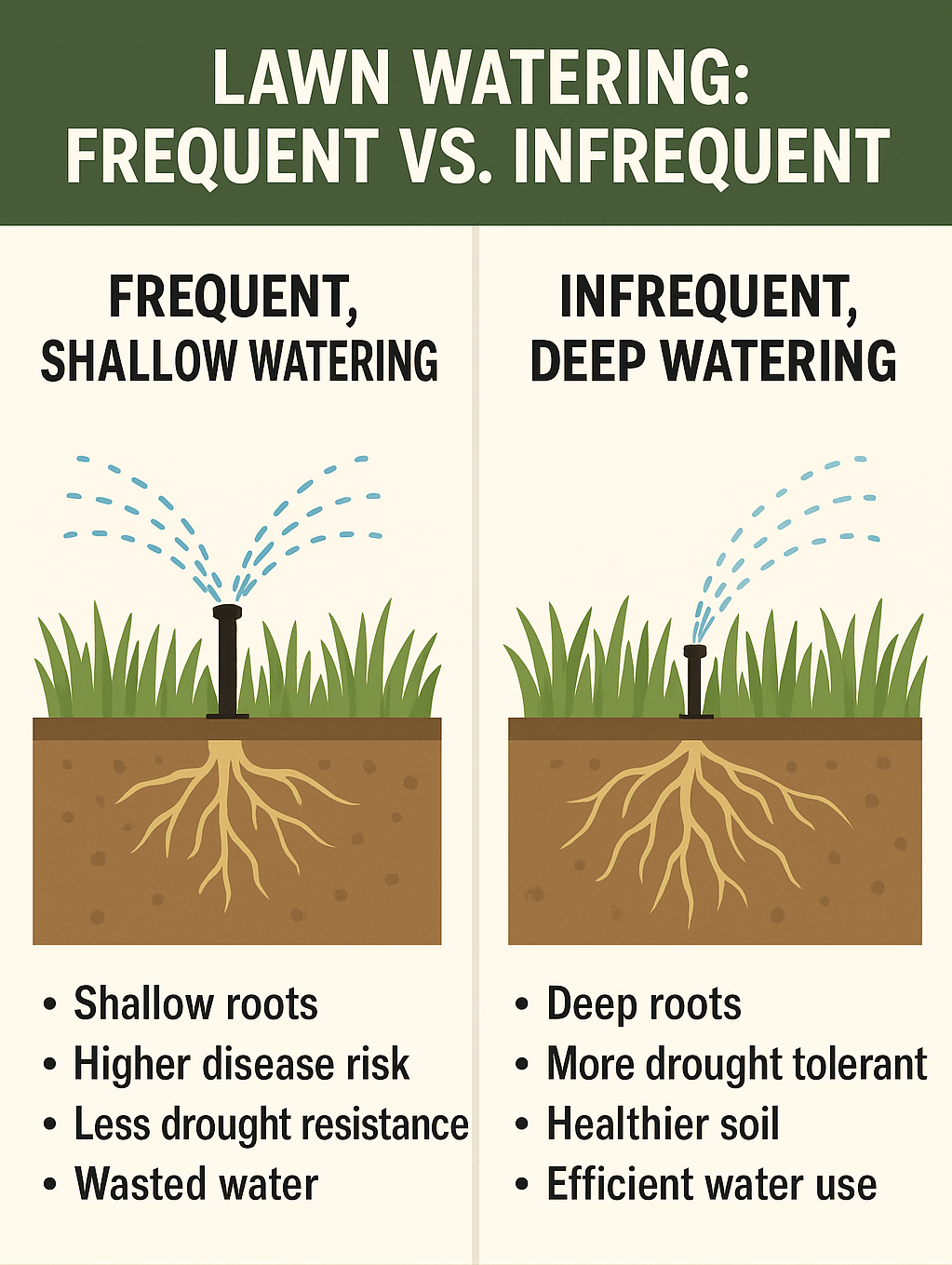
The Underlying Cause in Central Wisconsin: The soils in the Central WI area are predominantly sandy. This type of soil has a low water-holding capacity, meaning it drains very quickly. However, a daily watering schedule, even with sandy soil, prevents the ground from ever properly drying out. The constant moisture near the surface creates a detrimental environment for grass roots. Because water is always readily available at the surface, the roots have no reason to grow deeper. This results in a shallow, weak root system that is highly vulnerable to the stresses of heat and drought. The consistently wet conditions also create an ideal habitat for opportunistic weeds and turf-damaging fungi.

The Solution: A Deep and Infrequent Watering Strategy

To achieve a healthy, resilient lawn, a new irrigation strategy must be implemented that works with, not against, the local climate and soil conditions.

  • Water Deeply, But Infrequently: The single most important change is to move away from daily watering. The new schedule should aim to apply approximately one to one and a half inches of water per week, including rainfall, in only two or three sessions. This encourages the grass roots to grow deep—six to eight inches—into the soil in search of moisture. A deep root system makes the lawn more drought-tolerant and less susceptible to disease.
  • Implement a "Cycle and Soak" Method: Given the fast-draining sandy soil, the "cycle and soak" method is highly effective. Instead of a single long watering session, divide the total watering time into two or three shorter cycles, with a one-hour break in between each. This allows water to be absorbed fully, preventing runoff and ensuring deep penetration.
  • Utilize Smart Technology: To take the guesswork out of watering, a rain sensor should be installed to automatically shut off the system when rain is detected. Even better, a smart irrigation controller can be used. This technology uses local weather data to adjust the watering schedule dynamically, ensuring the lawn gets the right amount of water based on real-time conditions like temperature, wind, and humidity.
  • Adjust for Different Zones: Most yards have a mix of sunny and shady areas. The irrigation system should be zoned and programmed to deliver different amounts of water to each area. Areas in full sun will need more water than those in the shade, which can be prone to fungal issues if overwatered.

Outcome: By adopting these practices, lawns in the Central WI area can be transformed from struggling to thriving. The improved root system leads to a denser, more vibrant green turf that is naturally more resistant to drought, weeds, and disease. The property benefits from a healthier lawn and a significant reduction in wasted water, which leads to lower utility bills. This case study demonstrates that proper irrigation management, tailored to the unique environment of Central Wisconsin, is the key to a sustainable and beautiful landscape.